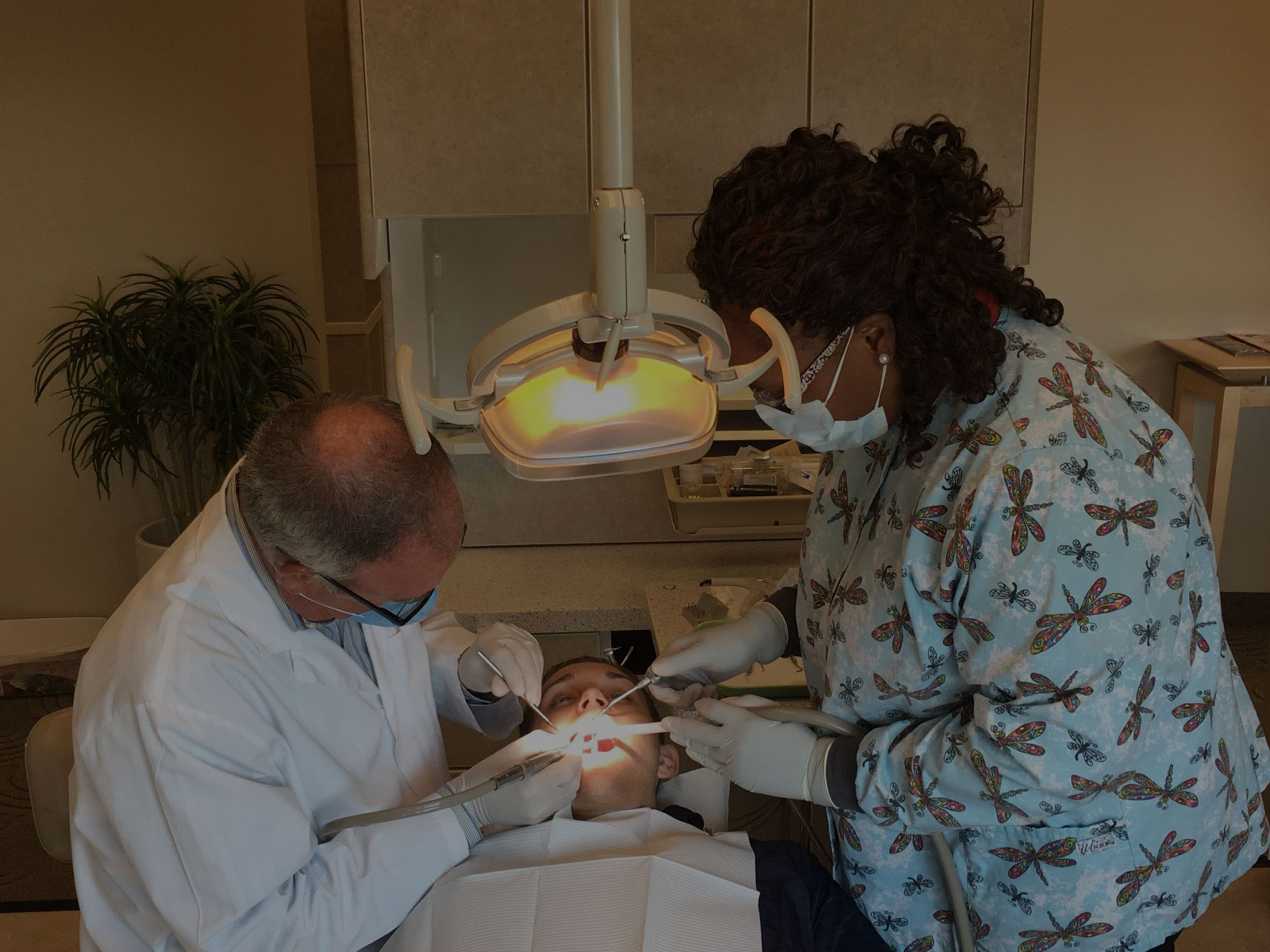

What are dentist implants?
Dental implants are artificial replacements for missing tooth roots. Rather than just replacing teeth, dental implants restore the entire supporting structure—both the anchoring root and the tooth.
Made from titanium alloy, dental implants are surgically attached to the jawbone to support and reinforce new artificial teeth, the same way as natural roots work with natural teeth.
Once dental implants are placed and fully fused with the jawbone, they function just like natural teeth: chewing, biting, and speaking. They work to avert bone density loss, enhance gum health, and preserve structure in your mouth and face. Dental implants also help to restore and maintain a happy smile, which can boost confidence in the wearer’s appearance.
Why would someone need dental implants in Englewood?
Teeth serve essential functions in the human mouth: They maintain a strong bite, support a healthy jawbone, and reduce the prospect of bone matter loss in the jaw. Even one vacant tooth can affect one’s oral health. Dental implants are safe and strong artificial replacements that duplicate the functions of natural teeth.
Cosmetic considerations also come into play with dental implants, and they’re every bit as significant as the health reasons. An attractive smile can have a substantial effect on one’s presence, self-esteem, and confidence. Dental implants restore and enhance your teeth’s appearance and natural smile.
What kinds of cosmetic dental implants in Englewood are available?
Dental implants come in a variety of configurations. The most common types are single-tooth replacements and implant-supported bridges that span entire areas left by multiple teeth.
Who can get dental implants?
Generally speaking, anyone with missing teeth—whether through injury, disease, or decay, or because they were born without them—is a candidate for medical or cosmetic dental implants in Englewood. There are, however, certain factors that come into play in your dentist’s recommendation that one get dental implants.
Young people may be advised to wait until they’ve reached their mid-teens to get dental implants. Proper structural support is a key factor in the success of dental implants, and jawbones that haven’t reached full growth may not be able to accommodate the support implants require. Boys usually reach this stage at around age 18; girls do at around age 16.
Certain health factors are also important to consider. Heavy smokers, diabetics, and radiation patients who have been treated in their neck or head areas may need additional consideration from their dentists before receiving dental implants. If the natural jawbone isn’t sufficiently dense or resilient enough to support the new implants, your dentist may suggest bone augmentation or encourage you to consider other options.
What to expect with dental implants from Inverness
Surgery is a major event that most adults must face in their lives. When it comes to medical or cosmetic implants, Englewood patients will find Inverness Family Dentistry one of the most experienced and thoughtful dental practitioners in the area.
We believe in building a bond with each patient through listening to their concerns and offering practical, affordable solutions. Our surgeons and staff work with our patients to find solutions that accommodate their lifestyles, schedule, and resources. We keep a relaxing and supportive atmosphere where all are welcome and appreciated. We’re committed to providing the best oral care our patients can receive by restoring the health and confidence that dental implants promote.
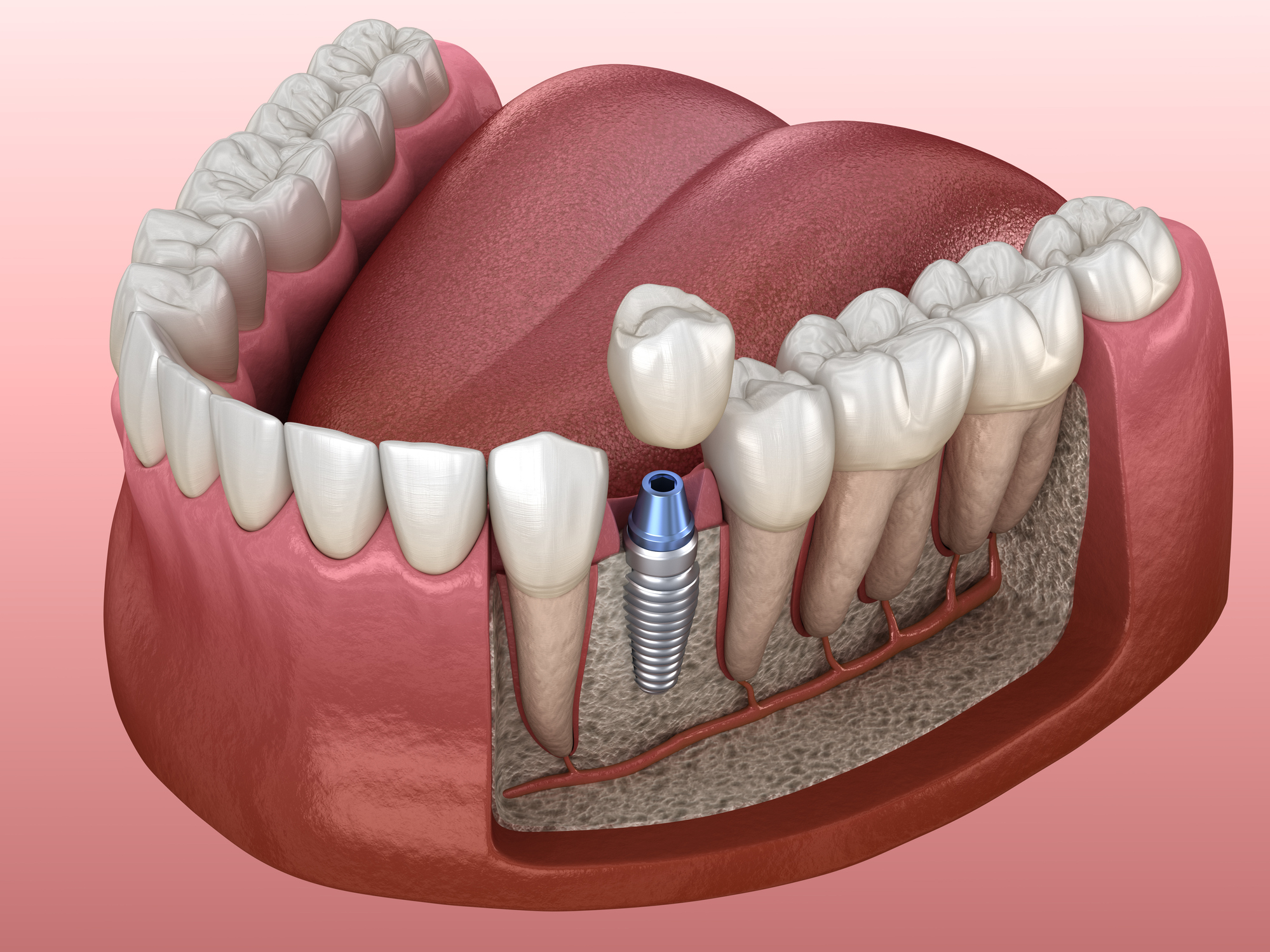
What is the process for dental implants in Englewood?
Getting a dental implant is much like many other forms of surgery: It’s a process conducted only after full diagnosis and preparation have taken place.
Preparation. Assessing your readiness for dental implants is the first step. We examine the patient’s oral health to determine if their jaw and gum structure are ready to accept the implant, or whether bone or tissue grafts or other treatments may be necessary to finish first. When the patient clears this initial hurdle, the implant process can begin:
- Initial drilling. The dental surgeon drills a small hole in the jaw, in a spot where there’s no teeth or obstructions. The resulting hole is deliberately and carefully enlarged to accommodate the width of the titanium screw.
- Screw placement. The implant screw is placed and secured with surrounding gum tissue. A protective screw is then installed over the implant to ensure proper healing. Over the next few months, the jawbone gradually fuses with the screw as if it were a natural object. This process is called osseointegration.
- Abutment attachment. About six months later, the dentist exposes the implant and affixes an abutment or brace to the implant. This object will eventually keep the crown or artificial tooth in place. Once the abutment is fully set up, the dentist implants a temporary crown while the permanent one is being prepared.
- Final crown placement. Finally, the dentist replaces the temporary crown with its permanent replacement. The gum tissue gradually adapts to the crown and seals itself around the bottom edges. The patient can now use their dental implant the same way they use their natural teeth—eating, chewing, speaking, and smiling with total confidence.
Dental implants can and should be cared for the same way as natural teeth: with regular brushing, flossing, and rinsing. It’s best to avoid highly abrasive toothpaste or solutions, as they can wear down or erode the protective surface of the implant. It’s also best to avoid chewing on extremely hard items to prevent cracking or chipping of the implant—but that’s something one should avoid doing with their natural teeth anyway.
How successful are cosmetic dental implants in Englewood?
Research shows that the success rate of dental implants is extraordinarily high, up to 98%. The outcome depends on the exact placement point of the implant on the jawbone and the healing process, but in the vast majority of cases, dentist implants seal and bond successfully within a year or two. Solid dental implants can last 25 years or even longer. Even if a patient needs a replacement crown after that time, the original titanium implant will still be functional and able to support it.
Inverness Family Dentistry has extensive experience in the dental and cosmetic implants Englewood needs. We’re here to answer all your questions and guide you through the process with understanding, security, and compassion.